
The Rise of Logistics Companies in Canada and Their Impact | MacMillan Supply Chain Group

In this article:

MacMillan Supply Chain Group Elevate Your Logistics Experience

Subscribe for more articles like this!

Subscription Form

 A Quick Summary and Overview

The Canadian logistics industry is experiencing unprecedented growth, with the 3PL market projected to reach $25.12 billion by 2030. This expansion is driven by e-commerce growth, technological innovation, and increasing cross-border trade. MacMillan Supply Chain Group stands at the forefront of this evolution, offering cutting-edge warehouse automation, last-mile delivery solutions, and specialized services like cold chain logistics. As businesses navigate supply chain challenges, Canadian logistics companies continue to adapt and innovate, creating more efficient, sustainable, and resilient supply networks that connect Canada to global markets.

The Rise of Logistics Companies in Canada and Their Impact

The Canadian logistics landscape has transformed dramatically over the past decade. From traditional warehousing and transportation to sophisticated supply chain solutions powered by artificial intelligence and automation, logistics companies in Canada have evolved to meet changing consumer demands and business needs. With e-commerce sales growing at 13% annually and cross-border shipping to the US increasing steadily, the importance of efficient, reliable logistics services has never been greater.

MacMillan Supply Chain Group has established itself as a leader in this dynamic environment, providing innovative third-party logistics (3PL) services that help businesses navigate complex supply chain challenges. Whether it’s implementing warehouse automation trends or developing specialized cold chain logistics in Canada, MacMillan’s comprehensive approach addresses the unique requirements of the Canadian market while facilitating seamless connections to global supply networks.

This article explores how logistics companies are reshaping Canada’s economic landscape, the technologies driving this transformation, and the strategic advantages that companies like MacMillan Supply Chain Group bring to businesses operating in this rapidly evolving sector.

The Evolution of Canadian Logistics: Market Trends and Growth Drivers
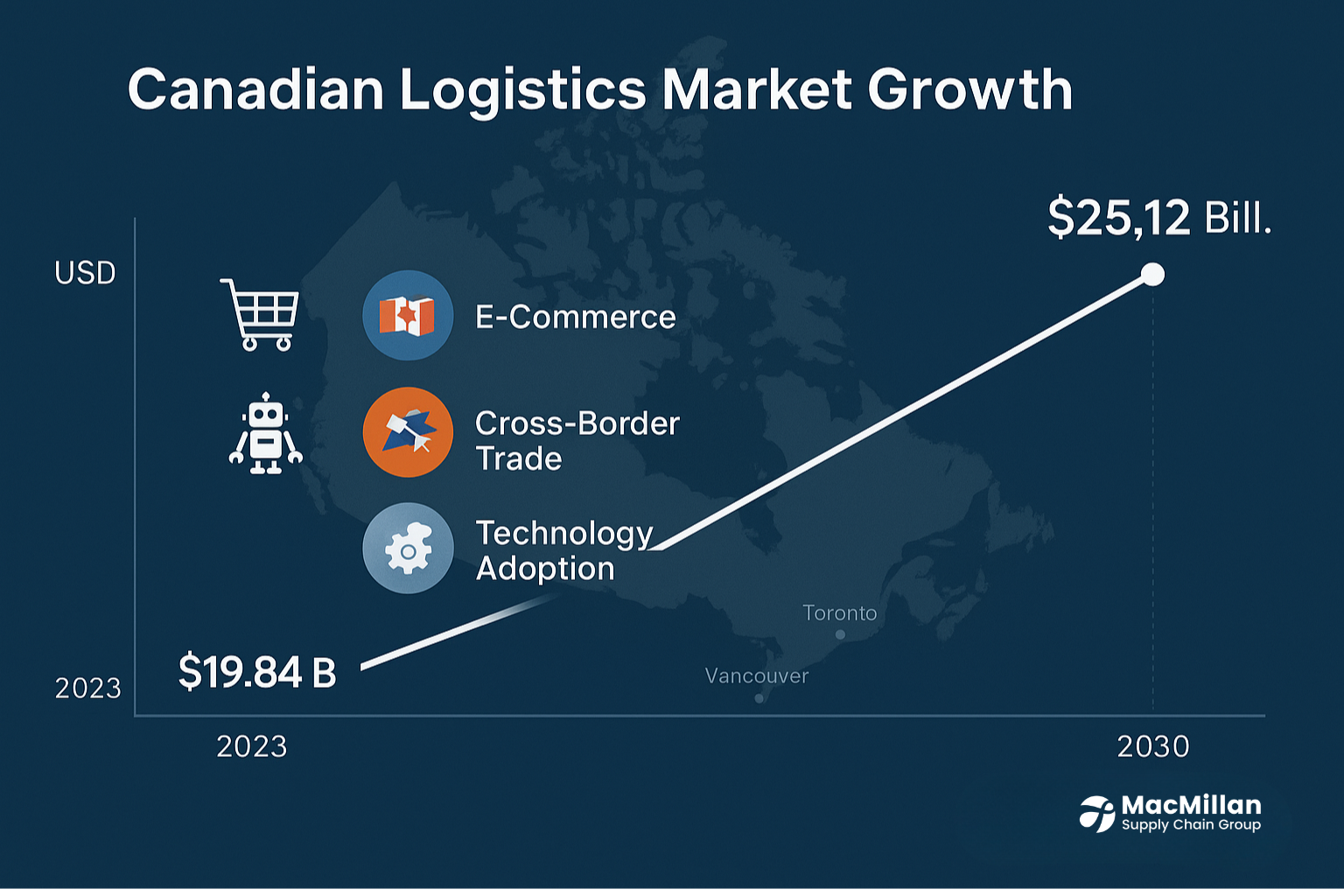
The Canadian logistics industry has experienced remarkable growth, with the 3PL market valued at approximately $19.84 billion in 2023 and projected to reach $25.12 billion by 2030. This represents a compound annual growth rate of 4.83%, significantly outpacing overall economic growth. Several key factors are driving this expansion.

E-commerce has fundamentally altered consumer expectations and supply chain requirements. With over 80% of Canadians now shopping online regularly, logistics companies have had to develop sophisticated e-commerce fulfillment strategies that enable rapid order processing and delivery. This shift has created unprecedented demand for warehouse space, particularly in urban centers like Toronto, Vancouver, and Montreal.

Cross-border shipping to the US represents another major growth driver. The United States remains Canada’s largest trading partner, with approximately 75% of Canadian exports destined for American markets. This relationship has intensified the need for seamless cross-border logistics solutions that navigate customs requirements while maintaining competitive delivery timeframes.

Geographic challenges unique to Canada have shaped the industry’s development. The country’s vast territory, combined with population concentration along the southern border, requires logistics networks that efficiently serve dense urban markets while maintaining connectivity to remote communities. This has led to specialized Western Canada transportation solutions and regional distribution strategies that account for seasonal variations and infrastructure limitations.

Technology adoption has accelerated across the sector, with Canadian freight market growth closely tied to innovations in automation, tracking systems, and predictive analytics. Leading companies like MacMillan Supply Chain Group have invested heavily in these technologies, positioning themselves at the forefront of the digital logistics revolution.

Technology Transformation: How Innovation is Reshaping Canadian Logistics
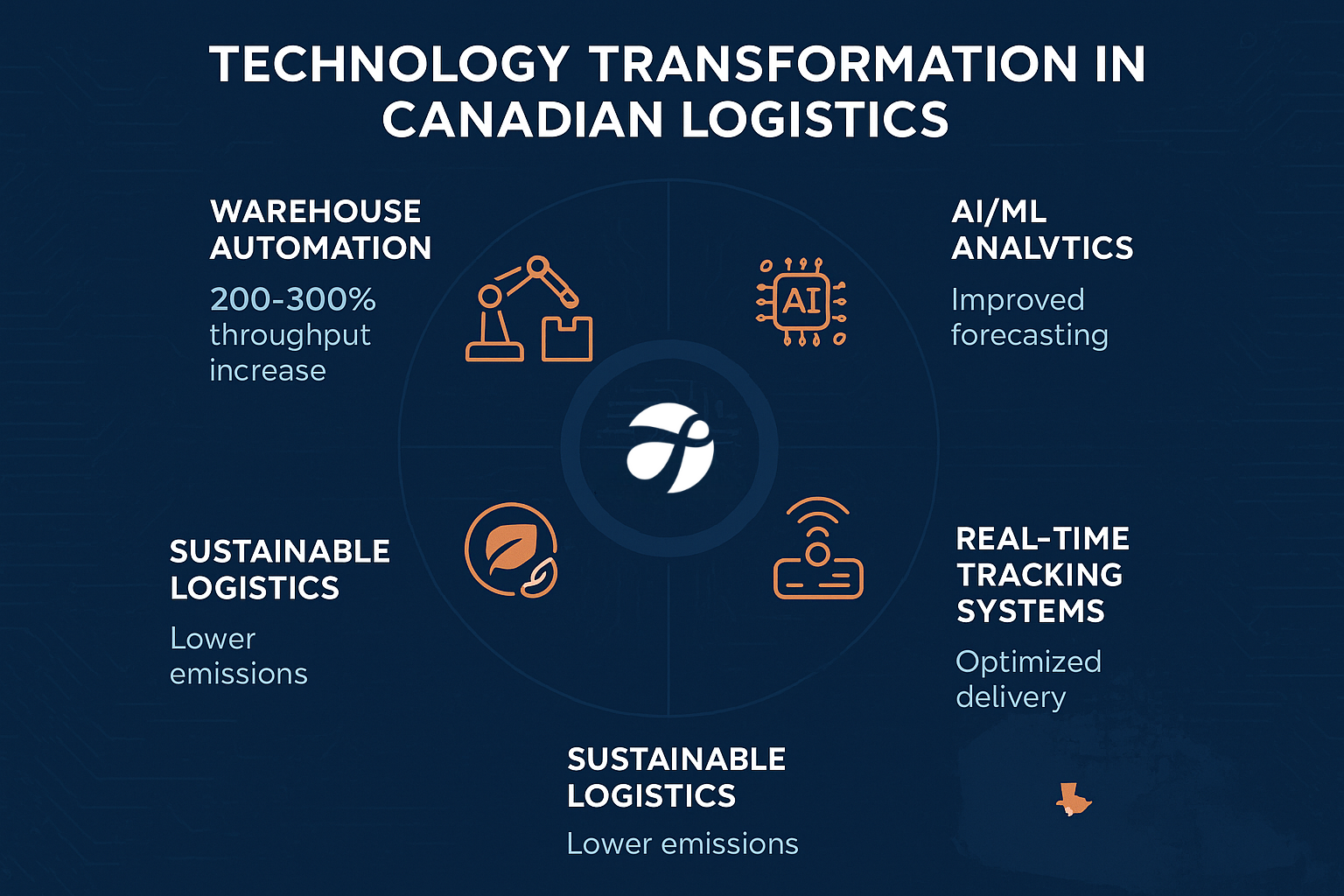
Technological innovation has become the primary competitive differentiator among logistics companies in Canada. Warehouse automation trends have revolutionized fulfillment operations, with advanced systems including conveyor networks, pick-to-light technology, and collaborative robots dramatically increasing processing capacity while reducing error rates.

MacMillan Supply Chain Group exemplifies this technological leadership through implementation of cutting-edge warehouse management systems that enable throughput increases of 200-300% during peak periods while maintaining error rates below 0.1%. This technological sophistication positions the company as an ideal partner for businesses scaling their e-commerce operations.

Real-time visibility has become a standard expectation across the North American supply chain. Advanced tracking systems now provide minute-by-minute location updates, predictive delivery estimates, and exception alerts that enable proactive issue resolution. This transparency extends across all transportation modes, creating seamless visibility from manufacturer to end customer.

Artificial intelligence and machine learning applications are transforming operational efficiency throughout Canadian distribution networks. These technologies enable dynamic route optimization, predictive maintenance scheduling, and automated inventory management that anticipates demand fluctuations before they impact service levels.

The integration of Internet of Things (IoT) devices throughout the supply chain has created new possibilities for condition monitoring and quality assurance. This is particularly valuable in cold chain logistics in Canada, where temperature-sensitive pharmaceuticals and food products require continuous environmental monitoring to maintain product integrity.

Data analytics capabilities have become essential for competitive logistics operations. Leading providers now employ sophisticated analytics platforms that identify optimization opportunities, predict potential disruptions, and quantify performance improvements across complex supply networks. This data-driven approach enables continuous improvement while providing valuable business intelligence to clients.

Cross-Border Excellence: Navigating US-Canada Logistics Challenges
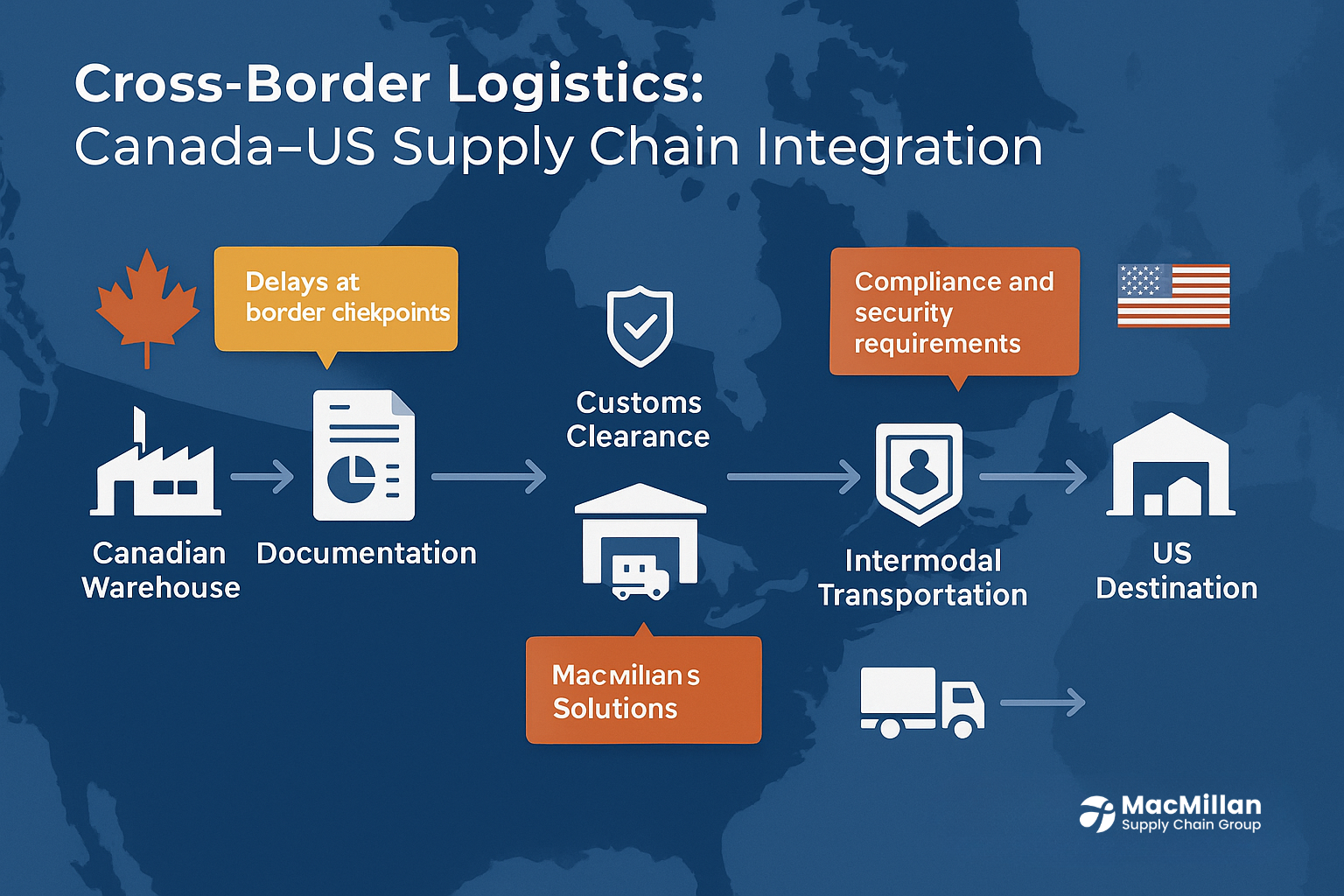
Cross-border shipping to the US presents unique challenges and opportunities for Canadian logistics providers. With approximately $1.7 billion in goods crossing the border daily, efficient management of cross-border customs brokerage and transportation has become a critical capability for companies serving North American markets.

MacMillan Supply Chain Group has developed specialized expertise in U.S.-Canada trade logistics, implementing systems that streamline documentation requirements, expedite customs clearance, and maintain compliance with evolving regulatory frameworks. This expertise is particularly valuable for Canadian businesses pursuing U.S. market expansion strategies without establishing their own American logistics infrastructure.

The CUSMA/USMCA agreement has created new opportunities for integrated cross-border supply chains, with harmonized regulations facilitating smoother trade flows between Canada and the United States. Leading logistics providers have adapted their operations to capitalize on these opportunities while helping clients navigate the agreement’s specific requirements and documentation needs.

Intermodal transportation solutions have become increasingly important for efficient cross-border shipping. By combining rail, truck, and sometimes maritime transportation modes, logistics companies can optimize costs and transit times while reducing environmental impact. This approach is particularly effective for shipments between major Canadian population centers and U.S. destinations.

Border delays remain a significant challenge, with unpredictable processing times creating uncertainty for just-in-time supply chains. Advanced logistics providers mitigate this risk through participation in trusted trader programs like C-TPAT and PIP, pre-clearance initiatives, and strategic buffer inventory positioning that maintains service levels despite occasional border disruptions.

Technology integration between Canadian and U.S. systems has improved significantly, with electronic data interchange and digital documentation reducing paperwork requirements and expediting clearance processes. This digital transformation has been particularly valuable during pandemic conditions, when physical document handling presented additional complications.

Specialized Solutions: Cold Chain, Last-Mile, and Sustainable Logistics

Specialized logistics capabilities have become key differentiators among Canadian logistics providers. Cold chain logistics in Canada represents one of the fastest-growing specialized segments, with increasing demand for temperature-controlled transportation and storage of pharmaceuticals, food products, and other sensitive items.

MacMillan Supply Chain Group has invested significantly in cold chain infrastructure, implementing advanced temperature monitoring systems, specialized packaging solutions, and trained personnel who understand the unique requirements of temperature-sensitive logistics. This capability has become particularly valuable for pharmaceutical distribution, where strict regulatory requirements govern handling procedures.

Last-mile delivery in Canada presents distinct challenges due to the country’s geographic diversity and weather conditions. Urban congestion in Toronto, Montreal, and Vancouver requires different approaches than rural delivery in remote regions. Leading logistics providers have developed flexible last-mile networks that combine company-owned assets, partner carriers, and innovative delivery models to maintain service consistency across these diverse environments.

Sustainable freight solutions have moved from optional differentiators to essential service components as businesses increasingly prioritize environmental responsibility. MacMillan and other forward-thinking logistics companies have implemented comprehensive sustainability programs that include alternative fuel vehicles, energy-efficient facilities, optimized routing to reduce emissions, and packaging waste reduction initiatives.

E-commerce fulfillment strategies have become increasingly sophisticated, with leading providers offering omnichannel capabilities that integrate online and offline retail operations. These solutions enable inventory sharing across channels, unified order management, and consistent customer experience regardless of purchase pathway.

Value-added services like kitting, assembly, packaging, and returns management have expanded the role of logistics providers from simple transportation and warehousing to comprehensive supply chain partners. These capabilities enable clients to outsource non-core functions while maintaining quality control and customer satisfaction.

Challenges Facing Canadian Logistics Companies

Despite impressive growth, logistics companies in Canada face significant challenges that impact operational efficiency and profitability. Understanding these obstacles is essential for businesses selecting logistics partners and for providers developing strategic solutions.

Labor Shortages and Workforce Challenges

The logistics industry faces persistent labor shortages, particularly for truck drivers and warehouse personnel. Canada currently has approximately 23,000 unfilled truck driver positions, with projections indicating this gap could reach 55,000 by 2024. These shortages drive up labor costs while potentially compromising service reliability during peak periods.

Infrastructure Constraints

Canada’s transportation infrastructure faces capacity limitations in key corridors, particularly around major ports and border crossings. Congestion at Vancouver port logistics facilities, Toronto-area highways, and key border points creates unpredictable delays that complicate scheduling and resource allocation. Weather-related disruptions further complicate infrastructure reliability, with winter conditions frequently impacting northern routes.

Technology Integration Complexity

While technology offers tremendous potential benefits, implementation challenges can create significant obstacles. Legacy systems, data compatibility issues, and workforce adaptation requirements often complicate technology deployments. The substantial investment required for comprehensive automation can also present financial barriers, particularly for smaller logistics providers.

Regulatory Compliance Burden

Logistics operations must navigate complex regulatory frameworks covering transportation safety, customs compliance, environmental standards, and labor regulations. These requirements vary by province and become even more complex for cross-border operations. Maintaining compliance while operating efficiently requires sophisticated management systems and specialized expertise.

Seasonal Demand Volatility

Canadian logistics operations experience significant seasonal fluctuations, with holiday peak periods often generating volumes 200-300% above baseline levels. This volatility creates resource allocation challenges, as companies must maintain capacity for peak periods that remains underutilized during normal operations. Weather-related seasonal challenges further complicate operational planning and execution.

Last-Mile Delivery Complexity

The final delivery stage presents unique challenges, particularly in Canada’s diverse geographic landscape. Urban congestion, rural access limitations, and consumer delivery preferences create a complex operational environment that requires specialized solutions. The rising cost of last-mile delivery, which can represent up to 53% of total shipping costs, creates margin pressure throughout the supply chain.

MacMillan Supply Chain Group’s Innovative Approaches

MacMillan Supply Chain Group has developed comprehensive solutions to address the challenges facing Canadian logistics operations. By combining technological innovation, specialized expertise, and strategic partnerships, MacMillan delivers exceptional value to clients across diverse industries and market segments.

Advanced Technology Implementation

MacMillan has made strategic investments in warehouse automation technologies that dramatically increase operational efficiency while reducing labor dependencies. Their advanced warehouse management system integrates with automated storage and retrieval systems, pick-to-light technology, and collaborative robots to achieve throughput increases of 200-300% during peak periods while maintaining error rates below 0.1%.

Real-time visibility tools provide clients with complete transparency throughout the supply chain. MacMillan’s proprietary tracking platform integrates with transportation management systems to deliver continuous location updates, predictive delivery estimates, and exception alerts that enable proactive issue resolution. This visibility extends across all transportation modes, creating seamless transparency from manufacturer to end customer.

Predictive analytics capabilities enable MacMillan to anticipate potential disruptions and implement mitigation strategies before service impacts occur. By analyzing historical performance data, current operational conditions, and external factors like weather and traffic patterns, the company’s analytics platform identifies optimization opportunities while providing valuable business intelligence to clients.

Specialized Service Offerings

MacMillan has developed industry-leading cold chain logistics capabilities that maintain product integrity throughout the supply chain. Temperature-controlled facilities feature redundant cooling systems, continuous environmental monitoring, and specialized handling procedures that ensure compliance with regulatory requirements for pharmaceuticals, food products, and other temperature-sensitive items.

The company’s cross-border expertise streamlines U.S.-Canada trade logistics through comprehensive knowledge of customs requirements, participation in trusted trader programs, and strategic relationships with customs brokers and border agencies. This expertise minimizes clearance delays while ensuring regulatory compliance for all cross-border shipments.

MacMillan’s e-commerce fulfillment strategies address the unique challenges of online retail through specialized facility design, order processing automation, and integration with major e-commerce platforms. These capabilities enable rapid order fulfillment, accurate inventory management, and seamless returns processing that enhance the customer experience.

Flexible Resource Models

To address seasonal demand fluctuations, MacMillan has implemented flexible resource models that scale capacity to match current requirements. This approach combines core staff with trained temporary personnel, automated systems that increase throughput without proportional staffing increases, and strategic partnerships that provide additional capacity during peak periods.

The company’s distributed network model positions inventory strategically across multiple facilities, reducing transportation distances while increasing service reliability. This approach is particularly effective for e-commerce operations, where proximity to end customers significantly impacts delivery speed and transportation costs.

Sustainability Initiatives

MacMillan has implemented comprehensive sustainability programs that reduce environmental impact while delivering operational benefits. These initiatives include:

  • Alternative fuel vehicles and efficient routing that reduce emissions
  • Energy-efficient facilities with LED lighting, smart climate control, and renewable energy sources
  • Packaging optimization that reduces material usage and waste
  • Recycling programs that divert materials from landfills
  • Measurement and reporting systems that track environmental performance metrics

Continuous Improvement Culture

MacMillan maintains a relentless focus on operational excellence through structured continuous improvement programs. Cross-functional teams regularly identify enhancement opportunities, implement targeted solutions, and measure performance impacts. This approach enables ongoing efficiency gains while fostering innovation throughout the organization.

The company’s investment in employee development ensures team members have the skills and knowledge needed to excel in an evolving logistics environment. Comprehensive training programs, career advancement opportunities, and performance recognition systems create a motivated workforce that delivers exceptional client service.

Partnering with MacMillan Supply Chain Group: Your Path to Logistics Excellence

Selecting the right logistics partner is a critical decision that directly impacts your business performance, customer satisfaction, and competitive positioning. By partnering with MacMillan Supply Chain Group, you can leverage industry-leading capabilities while avoiding common logistics challenges that hamper growth and operational efficiency.

Begin with a Comprehensive Assessment

The journey to logistics excellence starts with understanding your current operations and future requirements. MacMillan’s experienced consultants conduct thorough assessments that identify improvement opportunities, potential bottlenecks, and strategic priorities. This process examines your entire supply chain, from procurement through final delivery, to develop customized solutions that address your specific challenges.

Implement Scalable Solutions

MacMillan’s modular service approach allows you to implement solutions that match your immediate needs while establishing a foundation for future growth. Whether you require comprehensive third-party logistics (3PL) services or targeted support for specific functions like e-commerce fulfillment strategies or cross-border shipping to the US, MacMillan configures solutions that align with your business objectives and budget constraints.

Leverage Technology Advantages

By partnering with MacMillan, you gain immediate access to advanced logistics technologies without significant capital investment. Their warehouse automation systems, transportation management platforms, and visibility tools represent millions in technology investments that become available to your business through the partnership relationship. This technology access accelerates your digital transformation while reducing implementation risks.

Access Specialized Expertise

MacMillan’s team includes specialists in critical areas including customs compliance, temperature-controlled logistics, and regulatory requirements. This expertise helps you navigate complex logistics challenges while avoiding costly mistakes and compliance issues. Their knowledge of Canadian freight market growth trends and emerging opportunities also provides valuable strategic insights for your business planning.

Take the Next Step

Ready to transform your logistics operations and gain competitive advantage? Contact MacMillan Supply Chain Group today to schedule a consultation with our logistics experts. Our team will work with you to understand your unique challenges and develop customized solutions that drive efficiency, reliability, and growth.

Call us at (416) 548-8100 or visit our website at www.macmillansc.com to learn more about our services and how we can help your business thrive in today’s complex supply chain environment. With MacMillan as your logistics partner, you’ll gain the capabilities, expertise, and technology needed to exceed customer expectations while optimizing your supply chain performance.

Frequently Asked Questions About Logistics Companies in Canada

Third-party logistics providers offer a comprehensive range of supply chain services including warehousing, inventory management, order fulfillment, transportation, freight forwarding, customs brokerage, and value-added services like kitting and assembly. MacMillan Supply Chain Group provides all these core services plus specialized offerings including cold chain logistics, e-commerce fulfillment, cross-border shipping to the US, and sustainable freight solutions. Our integrated approach allows businesses to outsource their entire logistics operation or select specific services based on their unique requirements.

Warehouse automation is transforming Canadian logistics through technologies like automated storage and retrieval systems, robotic picking, conveyor systems, and AI-powered inventory management. These innovations increase throughput capacity by 200-300% while reducing error rates to below 0.1%. MacMillan has invested heavily in these technologies, implementing systems that optimize space utilization, accelerate order processing, and reduce labor dependencies. The result is faster, more accurate fulfillment that meets the increasing demands of e-commerce and omnichannel retail.

Cross-border shipping challenges include customs documentation requirements, duty and tax calculations, regulatory compliance for specific product categories, potential inspection delays, and differing transportation regulations. MacMillan simplifies these challenges through specialized expertise in U.S.-Canada trade logistics, participation in trusted trader programs that expedite clearance, integrated documentation systems, and strategic relationships with customs authorities. Our comprehensive approach ensures compliant, efficient cross-border movements that maintain your delivery commitments.

Leading logistics companies are implementing comprehensive sustainability initiatives including alternative fuel vehicles, energy-efficient facilities, optimized routing to reduce emissions, packaging waste reduction, and measurement systems that track environmental performance. MacMillan's sustainable freight solutions include electric delivery vehicles for urban operations, energy-efficient warehouses with LED lighting and smart climate control, and packaging optimization services that reduce material usage while maintaining product protection. These initiatives reduce environmental impact while often delivering operational cost benefits.

Cold chain logistics involves the temperature-controlled transportation and storage of products requiring specific environmental conditions, such as pharmaceuticals, vaccines, fresh food, and certain chemicals. It's particularly important in Canada due to extreme temperature variations, extensive transportation distances, and the country's significant pharmaceutical and food production sectors. MacMillan's cold chain logistics in Canada includes specialized refrigerated warehousing, temperature-monitored transportation, validated packaging solutions, and trained personnel who understand the unique requirements of temperature-sensitive products.

E-commerce businesses gain numerous advantages from 3PL partnerships, including scalable warehouse capacity that accommodates growth and seasonal fluctuations, reduced capital investment in facilities and technology, access to established carrier networks with preferential rates, specialized expertise in order fulfillment, and the ability to offer faster delivery through strategically located distribution points. MacMillan's e-commerce fulfillment strategies include integration with major e-commerce platforms, specialized picking processes for online orders, and distributed inventory models that position products closer to end customers.

Key selection factors include service capabilities aligned with your specific requirements, geographic coverage matching your customer distribution, technology systems that provide visibility and integration, operational performance metrics including accuracy and on-time delivery, financial stability ensuring long-term partnership viability, cultural alignment with your organization, and relevant industry experience. MacMillan recommends conducting site visits, reviewing case studies from similar clients, and developing a clear understanding of how the provider measures and reports performance before making this critical business decision.

Last-mile delivery in Canada's urban centers presents unique challenges including traffic congestion, parking limitations, high-rise deliveries, and consumer delivery preferences. Innovative solutions include urban micro-fulfillment centers that position inventory closer to customers, alternative delivery vehicles like electric vans and cargo bikes for congested areas, secure parcel lockers that consolidate deliveries, and advanced routing technologies that optimize delivery sequencing. MacMillan's last-mile delivery solutions combine these approaches with real-time tracking and customer communication to create efficient, reliable final-mile operations.

Modern logistics providers should offer comprehensive technology systems including warehouse management systems (WMS) that optimize inventory and fulfillment operations, transportation management systems (TMS) that manage carrier selection and routing, order management platforms that process client orders efficiently, real-time tracking and visibility tools, analytics capabilities that identify improvement opportunities, and integration capabilities with client systems. MacMillan's technology ecosystem provides all these capabilities through a unified platform that delivers complete supply chain visibility and control.

Canadian distribution networks offer strategic advantages for U.S. market expansion, including proximity to major American population centers, established cross-border transportation corridors, favorable exchange rates that can reduce operational costs, and expertise in navigating customs requirements. MacMillan supports U.S. market expansion strategies through distributed inventory positioning that balances Canadian and U.S. stockholding, cross-border transportation management that ensures reliable delivery, customs compliance expertise that prevents clearance delays, and scalable fulfillment capacity that grows with your American market presence.

The Rise of Logistics Companies in Canada and Their Impact | MacMillan Supply Chain Group

 A Quick Summary and Overview

The Canadian logistics industry is experiencing unprecedented growth, with the 3PL market projected to reach $25.12 billion by 2030. This expansion is driven by e-commerce growth, technological innovation, and increasing cross-border trade. MacMillan Supply Chain Group stands at the forefront of this evolution, offering cutting-edge warehouse automation, last-mile delivery solutions, and specialized services like cold chain logistics. As businesses navigate supply chain challenges, Canadian logistics companies continue to adapt and innovate, creating more efficient, sustainable, and resilient supply networks that connect Canada to global markets.

The Rise of Logistics Companies in Canada and Their Impact

The Canadian logistics landscape has transformed dramatically over the past decade. From traditional warehousing and transportation to sophisticated supply chain solutions powered by artificial intelligence and automation, logistics companies in Canada have evolved to meet changing consumer demands and business needs. With e-commerce sales growing at 13% annually and cross-border shipping to the US increasing steadily, the importance of efficient, reliable logistics services has never been greater.

MacMillan Supply Chain Group has established itself as a leader in this dynamic environment, providing innovative third-party logistics (3PL) services that help businesses navigate complex supply chain challenges. Whether it’s implementing warehouse automation trends or developing specialized cold chain logistics in Canada, MacMillan’s comprehensive approach addresses the unique requirements of the Canadian market while facilitating seamless connections to global supply networks.

This article explores how logistics companies are reshaping Canada’s economic landscape, the technologies driving this transformation, and the strategic advantages that companies like MacMillan Supply Chain Group bring to businesses operating in this rapidly evolving sector.

The Evolution of Canadian Logistics: Market Trends and Growth Drivers

The Canadian logistics industry has experienced remarkable growth, with the 3PL market valued at approximately $19.84 billion in 2023 and projected to reach $25.12 billion by 2030. This represents a compound annual growth rate of 4.83%, significantly outpacing overall economic growth. Several key factors are driving this expansion.

E-commerce has fundamentally altered consumer expectations and supply chain requirements. With over 80% of Canadians now shopping online regularly, logistics companies have had to develop sophisticated e-commerce fulfillment strategies that enable rapid order processing and delivery. This shift has created unprecedented demand for warehouse space, particularly in urban centers like Toronto, Vancouver, and Montreal.

Cross-border shipping to the US represents another major growth driver. The United States remains Canada’s largest trading partner, with approximately 75% of Canadian exports destined for American markets. This relationship has intensified the need for seamless cross-border logistics solutions that navigate customs requirements while maintaining competitive delivery timeframes.

Geographic challenges unique to Canada have shaped the industry’s development. The country’s vast territory, combined with population concentration along the southern border, requires logistics networks that efficiently serve dense urban markets while maintaining connectivity to remote communities. This has led to specialized Western Canada transportation solutions and regional distribution strategies that account for seasonal variations and infrastructure limitations.

Technology adoption has accelerated across the sector, with Canadian freight market growth closely tied to innovations in automation, tracking systems, and predictive analytics. Leading companies like MacMillan Supply Chain Group have invested heavily in these technologies, positioning themselves at the forefront of the digital logistics revolution.

Technology Transformation: How Innovation is Reshaping Canadian Logistics

Technological innovation has become the primary competitive differentiator among logistics companies in Canada. Warehouse automation trends have revolutionized fulfillment operations, with advanced systems including conveyor networks, pick-to-light technology, and collaborative robots dramatically increasing processing capacity while reducing error rates.

MacMillan Supply Chain Group exemplifies this technological leadership through implementation of cutting-edge warehouse management systems that enable throughput increases of 200-300% during peak periods while maintaining error rates below 0.1%. This technological sophistication positions the company as an ideal partner for businesses scaling their e-commerce operations.

Real-time visibility has become a standard expectation across the North American supply chain. Advanced tracking systems now provide minute-by-minute location updates, predictive delivery estimates, and exception alerts that enable proactive issue resolution. This transparency extends across all transportation modes, creating seamless visibility from manufacturer to end customer.

Artificial intelligence and machine learning applications are transforming operational efficiency throughout Canadian distribution networks. These technologies enable dynamic route optimization, predictive maintenance scheduling, and automated inventory management that anticipates demand fluctuations before they impact service levels.

The integration of Internet of Things (IoT) devices throughout the supply chain has created new possibilities for condition monitoring and quality assurance. This is particularly valuable in cold chain logistics in Canada, where temperature-sensitive pharmaceuticals and food products require continuous environmental monitoring to maintain product integrity.

Data analytics capabilities have become essential for competitive logistics operations. Leading providers now employ sophisticated analytics platforms that identify optimization opportunities, predict potential disruptions, and quantify performance improvements across complex supply networks. This data-driven approach enables continuous improvement while providing valuable business intelligence to clients.

Cross-Border Excellence: Navigating US-Canada Logistics Challenges

Cross-border shipping to the US presents unique challenges and opportunities for Canadian logistics providers. With approximately $1.7 billion in goods crossing the border daily, efficient management of cross-border customs brokerage and transportation has become a critical capability for companies serving North American markets.

MacMillan Supply Chain Group has developed specialized expertise in U.S.-Canada trade logistics, implementing systems that streamline documentation requirements, expedite customs clearance, and maintain compliance with evolving regulatory frameworks. This expertise is particularly valuable for Canadian businesses pursuing U.S. market expansion strategies without establishing their own American logistics infrastructure.

The CUSMA/USMCA agreement has created new opportunities for integrated cross-border supply chains, with harmonized regulations facilitating smoother trade flows between Canada and the United States. Leading logistics providers have adapted their operations to capitalize on these opportunities while helping clients navigate the agreement’s specific requirements and documentation needs.

Intermodal transportation solutions have become increasingly important for efficient cross-border shipping. By combining rail, truck, and sometimes maritime transportation modes, logistics companies can optimize costs and transit times while reducing environmental impact. This approach is particularly effective for shipments between major Canadian population centers and U.S. destinations.

Border delays remain a significant challenge, with unpredictable processing times creating uncertainty for just-in-time supply chains. Advanced logistics providers mitigate this risk through participation in trusted trader programs like C-TPAT and PIP, pre-clearance initiatives, and strategic buffer inventory positioning that maintains service levels despite occasional border disruptions.

Technology integration between Canadian and U.S. systems has improved significantly, with electronic data interchange and digital documentation reducing paperwork requirements and expediting clearance processes. This digital transformation has been particularly valuable during pandemic conditions, when physical document handling presented additional complications.

Specialized Solutions: Cold Chain, Last-Mile, and Sustainable Logistics

Specialized logistics capabilities have become key differentiators among Canadian logistics providers. Cold chain logistics in Canada represents one of the fastest-growing specialized segments, with increasing demand for temperature-controlled transportation and storage of pharmaceuticals, food products, and other sensitive items.

MacMillan Supply Chain Group has invested significantly in cold chain infrastructure, implementing advanced temperature monitoring systems, specialized packaging solutions, and trained personnel who understand the unique requirements of temperature-sensitive logistics. This capability has become particularly valuable for pharmaceutical distribution, where strict regulatory requirements govern handling procedures.

Last-mile delivery in Canada presents distinct challenges due to the country’s geographic diversity and weather conditions. Urban congestion in Toronto, Montreal, and Vancouver requires different approaches than rural delivery in remote regions. Leading logistics providers have developed flexible last-mile networks that combine company-owned assets, partner carriers, and innovative delivery models to maintain service consistency across these diverse environments.

Sustainable freight solutions have moved from optional differentiators to essential service components as businesses increasingly prioritize environmental responsibility. MacMillan and other forward-thinking logistics companies have implemented comprehensive sustainability programs that include alternative fuel vehicles, energy-efficient facilities, optimized routing to reduce emissions, and packaging waste reduction initiatives.

E-commerce fulfillment strategies have become increasingly sophisticated, with leading providers offering omnichannel capabilities that integrate online and offline retail operations. These solutions enable inventory sharing across channels, unified order management, and consistent customer experience regardless of purchase pathway.

Value-added services like kitting, assembly, packaging, and returns management have expanded the role of logistics providers from simple transportation and warehousing to comprehensive supply chain partners. These capabilities enable clients to outsource non-core functions while maintaining quality control and customer satisfaction.

Challenges Facing Canadian Logistics Companies

Despite impressive growth, logistics companies in Canada face significant challenges that impact operational efficiency and profitability. Understanding these obstacles is essential for businesses selecting logistics partners and for providers developing strategic solutions.

Labor Shortages and Workforce Challenges

The logistics industry faces persistent labor shortages, particularly for truck drivers and warehouse personnel. Canada currently has approximately 23,000 unfilled truck driver positions, with projections indicating this gap could reach 55,000 by 2024. These shortages drive up labor costs while potentially compromising service reliability during peak periods.

Infrastructure Constraints

Canada’s transportation infrastructure faces capacity limitations in key corridors, particularly around major ports and border crossings. Congestion at Vancouver port logistics facilities, Toronto-area highways, and key border points creates unpredictable delays that complicate scheduling and resource allocation. Weather-related disruptions further complicate infrastructure reliability, with winter conditions frequently impacting northern routes.

Technology Integration Complexity

While technology offers tremendous potential benefits, implementation challenges can create significant obstacles. Legacy systems, data compatibility issues, and workforce adaptation requirements often complicate technology deployments. The substantial investment required for comprehensive automation can also present financial barriers, particularly for smaller logistics providers.

Regulatory Compliance Burden

Logistics operations must navigate complex regulatory frameworks covering transportation safety, customs compliance, environmental standards, and labor regulations. These requirements vary by province and become even more complex for cross-border operations. Maintaining compliance while operating efficiently requires sophisticated management systems and specialized expertise.

Seasonal Demand Volatility

Canadian logistics operations experience significant seasonal fluctuations, with holiday peak periods often generating volumes 200-300% above baseline levels. This volatility creates resource allocation challenges, as companies must maintain capacity for peak periods that remains underutilized during normal operations. Weather-related seasonal challenges further complicate operational planning and execution.

Last-Mile Delivery Complexity

The final delivery stage presents unique challenges, particularly in Canada’s diverse geographic landscape. Urban congestion, rural access limitations, and consumer delivery preferences create a complex operational environment that requires specialized solutions. The rising cost of last-mile delivery, which can represent up to 53% of total shipping costs, creates margin pressure throughout the supply chain.

MacMillan Supply Chain Group’s Innovative Approaches

MacMillan Supply Chain Group has developed comprehensive solutions to address the challenges facing Canadian logistics operations. By combining technological innovation, specialized expertise, and strategic partnerships, MacMillan delivers exceptional value to clients across diverse industries and market segments.

Advanced Technology Implementation

MacMillan has made strategic investments in warehouse automation technologies that dramatically increase operational efficiency while reducing labor dependencies. Their advanced warehouse management system integrates with automated storage and retrieval systems, pick-to-light technology, and collaborative robots to achieve throughput increases of 200-300% during peak periods while maintaining error rates below 0.1%.

Real-time visibility tools provide clients with complete transparency throughout the supply chain. MacMillan’s proprietary tracking platform integrates with transportation management systems to deliver continuous location updates, predictive delivery estimates, and exception alerts that enable proactive issue resolution. This visibility extends across all transportation modes, creating seamless transparency from manufacturer to end customer.

Predictive analytics capabilities enable MacMillan to anticipate potential disruptions and implement mitigation strategies before service impacts occur. By analyzing historical performance data, current operational conditions, and external factors like weather and traffic patterns, the company’s analytics platform identifies optimization opportunities while providing valuable business intelligence to clients.

Specialized Service Offerings

MacMillan has developed industry-leading cold chain logistics capabilities that maintain product integrity throughout the supply chain. Temperature-controlled facilities feature redundant cooling systems, continuous environmental monitoring, and specialized handling procedures that ensure compliance with regulatory requirements for pharmaceuticals, food products, and other temperature-sensitive items.

The company’s cross-border expertise streamlines U.S.-Canada trade logistics through comprehensive knowledge of customs requirements, participation in trusted trader programs, and strategic relationships with customs brokers and border agencies. This expertise minimizes clearance delays while ensuring regulatory compliance for all cross-border shipments.

MacMillan’s e-commerce fulfillment strategies address the unique challenges of online retail through specialized facility design, order processing automation, and integration with major e-commerce platforms. These capabilities enable rapid order fulfillment, accurate inventory management, and seamless returns processing that enhance the customer experience.

Flexible Resource Models

To address seasonal demand fluctuations, MacMillan has implemented flexible resource models that scale capacity to match current requirements. This approach combines core staff with trained temporary personnel, automated systems that increase throughput without proportional staffing increases, and strategic partnerships that provide additional capacity during peak periods.

The company’s distributed network model positions inventory strategically across multiple facilities, reducing transportation distances while increasing service reliability. This approach is particularly effective for e-commerce operations, where proximity to end customers significantly impacts delivery speed and transportation costs.

Sustainability Initiatives

MacMillan has implemented comprehensive sustainability programs that reduce environmental impact while delivering operational benefits. These initiatives include:

  • Alternative fuel vehicles and efficient routing that reduce emissions
  • Energy-efficient facilities with LED lighting, smart climate control, and renewable energy sources
  • Packaging optimization that reduces material usage and waste
  • Recycling programs that divert materials from landfills
  • Measurement and reporting systems that track environmental performance metrics

Continuous Improvement Culture

MacMillan maintains a relentless focus on operational excellence through structured continuous improvement programs. Cross-functional teams regularly identify enhancement opportunities, implement targeted solutions, and measure performance impacts. This approach enables ongoing efficiency gains while fostering innovation throughout the organization.

The company’s investment in employee development ensures team members have the skills and knowledge needed to excel in an evolving logistics environment. Comprehensive training programs, career advancement opportunities, and performance recognition systems create a motivated workforce that delivers exceptional client service.

Partnering with MacMillan Supply Chain Group: Your Path to Logistics Excellence

Selecting the right logistics partner is a critical decision that directly impacts your business performance, customer satisfaction, and competitive positioning. By partnering with MacMillan Supply Chain Group, you can leverage industry-leading capabilities while avoiding common logistics challenges that hamper growth and operational efficiency.

Begin with a Comprehensive Assessment

The journey to logistics excellence starts with understanding your current operations and future requirements. MacMillan’s experienced consultants conduct thorough assessments that identify improvement opportunities, potential bottlenecks, and strategic priorities. This process examines your entire supply chain, from procurement through final delivery, to develop customized solutions that address your specific challenges.

Implement Scalable Solutions

MacMillan’s modular service approach allows you to implement solutions that match your immediate needs while establishing a foundation for future growth. Whether you require comprehensive third-party logistics (3PL) services or targeted support for specific functions like e-commerce fulfillment strategies or cross-border shipping to the US, MacMillan configures solutions that align with your business objectives and budget constraints.

Leverage Technology Advantages

By partnering with MacMillan, you gain immediate access to advanced logistics technologies without significant capital investment. Their warehouse automation systems, transportation management platforms, and visibility tools represent millions in technology investments that become available to your business through the partnership relationship. This technology access accelerates your digital transformation while reducing implementation risks.

Access Specialized Expertise

MacMillan’s team includes specialists in critical areas including customs compliance, temperature-controlled logistics, and regulatory requirements. This expertise helps you navigate complex logistics challenges while avoiding costly mistakes and compliance issues. Their knowledge of Canadian freight market growth trends and emerging opportunities also provides valuable strategic insights for your business planning.

Take the Next Step

Ready to transform your logistics operations and gain competitive advantage? Contact MacMillan Supply Chain Group today to schedule a consultation with our logistics experts. Our team will work with you to understand your unique challenges and develop customized solutions that drive efficiency, reliability, and growth.

Call us at (416) 548-8100 or visit our website at www.macmillansc.com to learn more about our services and how we can help your business thrive in today’s complex supply chain environment. With MacMillan as your logistics partner, you’ll gain the capabilities, expertise, and technology needed to exceed customer expectations while optimizing your supply chain performance.

Frequently Asked Questions About Logistics Companies in Canada

Third-party logistics providers offer a comprehensive range of supply chain services including warehousing, inventory management, order fulfillment, transportation, freight forwarding, customs brokerage, and value-added services like kitting and assembly. MacMillan Supply Chain Group provides all these core services plus specialized offerings including cold chain logistics, e-commerce fulfillment, cross-border shipping to the US, and sustainable freight solutions. Our integrated approach allows businesses to outsource their entire logistics operation or select specific services based on their unique requirements.

Warehouse automation is transforming Canadian logistics through technologies like automated storage and retrieval systems, robotic picking, conveyor systems, and AI-powered inventory management. These innovations increase throughput capacity by 200-300% while reducing error rates to below 0.1%. MacMillan has invested heavily in these technologies, implementing systems that optimize space utilization, accelerate order processing, and reduce labor dependencies. The result is faster, more accurate fulfillment that meets the increasing demands of e-commerce and omnichannel retail.

Cross-border shipping challenges include customs documentation requirements, duty and tax calculations, regulatory compliance for specific product categories, potential inspection delays, and differing transportation regulations. MacMillan simplifies these challenges through specialized expertise in U.S.-Canada trade logistics, participation in trusted trader programs that expedite clearance, integrated documentation systems, and strategic relationships with customs authorities. Our comprehensive approach ensures compliant, efficient cross-border movements that maintain your delivery commitments.

Leading logistics companies are implementing comprehensive sustainability initiatives including alternative fuel vehicles, energy-efficient facilities, optimized routing to reduce emissions, packaging waste reduction, and measurement systems that track environmental performance. MacMillan's sustainable freight solutions include electric delivery vehicles for urban operations, energy-efficient warehouses with LED lighting and smart climate control, and packaging optimization services that reduce material usage while maintaining product protection. These initiatives reduce environmental impact while often delivering operational cost benefits.

Cold chain logistics involves the temperature-controlled transportation and storage of products requiring specific environmental conditions, such as pharmaceuticals, vaccines, fresh food, and certain chemicals. It's particularly important in Canada due to extreme temperature variations, extensive transportation distances, and the country's significant pharmaceutical and food production sectors. MacMillan's cold chain logistics in Canada includes specialized refrigerated warehousing, temperature-monitored transportation, validated packaging solutions, and trained personnel who understand the unique requirements of temperature-sensitive products.

E-commerce businesses gain numerous advantages from 3PL partnerships, including scalable warehouse capacity that accommodates growth and seasonal fluctuations, reduced capital investment in facilities and technology, access to established carrier networks with preferential rates, specialized expertise in order fulfillment, and the ability to offer faster delivery through strategically located distribution points. MacMillan's e-commerce fulfillment strategies include integration with major e-commerce platforms, specialized picking processes for online orders, and distributed inventory models that position products closer to end customers.

Key selection factors include service capabilities aligned with your specific requirements, geographic coverage matching your customer distribution, technology systems that provide visibility and integration, operational performance metrics including accuracy and on-time delivery, financial stability ensuring long-term partnership viability, cultural alignment with your organization, and relevant industry experience. MacMillan recommends conducting site visits, reviewing case studies from similar clients, and developing a clear understanding of how the provider measures and reports performance before making this critical business decision.

Last-mile delivery in Canada's urban centers presents unique challenges including traffic congestion, parking limitations, high-rise deliveries, and consumer delivery preferences. Innovative solutions include urban micro-fulfillment centers that position inventory closer to customers, alternative delivery vehicles like electric vans and cargo bikes for congested areas, secure parcel lockers that consolidate deliveries, and advanced routing technologies that optimize delivery sequencing. MacMillan's last-mile delivery solutions combine these approaches with real-time tracking and customer communication to create efficient, reliable final-mile operations.

Modern logistics providers should offer comprehensive technology systems including warehouse management systems (WMS) that optimize inventory and fulfillment operations, transportation management systems (TMS) that manage carrier selection and routing, order management platforms that process client orders efficiently, real-time tracking and visibility tools, analytics capabilities that identify improvement opportunities, and integration capabilities with client systems. MacMillan's technology ecosystem provides all these capabilities through a unified platform that delivers complete supply chain visibility and control.

Canadian distribution networks offer strategic advantages for U.S. market expansion, including proximity to major American population centers, established cross-border transportation corridors, favorable exchange rates that can reduce operational costs, and expertise in navigating customs requirements. MacMillan supports U.S. market expansion strategies through distributed inventory positioning that balances Canadian and U.S. stockholding, cross-border transportation management that ensures reliable delivery, customs compliance expertise that prevents clearance delays, and scalable fulfillment capacity that grows with your American market presence.

MacMillan Supply Chain Group Elevate Your Logistics Experience

Subscribe for more articles like this!

Subscription Form

Meet the Author:

Latest tips to improve logistics

Get started with MacMillan

At Macmillan Supply Chain Group, we understand the critical
importance of timely, precise, and accurate fulfillment services.
Contact us Now!!!
Contact us Now!!!
Contact us Now!!!
CONTACT US NOW!!!